
7 Best Meta Ads Platforms in 2026 (UGC, AI & Creative Tools)
Since creative now drives performance more than targeting, the right tools matter. Here are seven of the best platforms for Meta ads in 2026 — across UGC marketplaces, AI creative, ad research, analytics and automation — and how to pick the ones your account actually needs.
The best Meta ads platforms in 2026 fall into categories: UGC marketplaces (Insense, Billo, Trend) for creator content, AdCreative.ai for AI-generated variations, Foreplay for ad research, Motion for creative analytics, and Smartly for ad automation. The right pick depends on your biggest bottleneck — creating, researching, launching or analyzing creative. None of them replace the one thing every campaign needs: a stable account to run on.
Why these platforms matter now
Meta's targeting is largely automated, so the lever that actually moves performance is creative — and producing enough good creative, fast enough, is hard. That's why a whole ecosystem of platforms has grown up around the parts of the job Ads Manager doesn't help with: sourcing authentic content, generating variations, researching what's working, and measuring which creatives drive results. If you're new to that shift, our breakdown of Facebook ad creative trends explains why creative is now the campaign.
One caveat before the list: tools and pricing change constantly, so treat the details here as a directional starting point and confirm specifics on each platform's site. Categories matter more than any single name.
The 7 best Meta ads platforms at a glance
Here's the full shortlist, grouped by what each one does best.
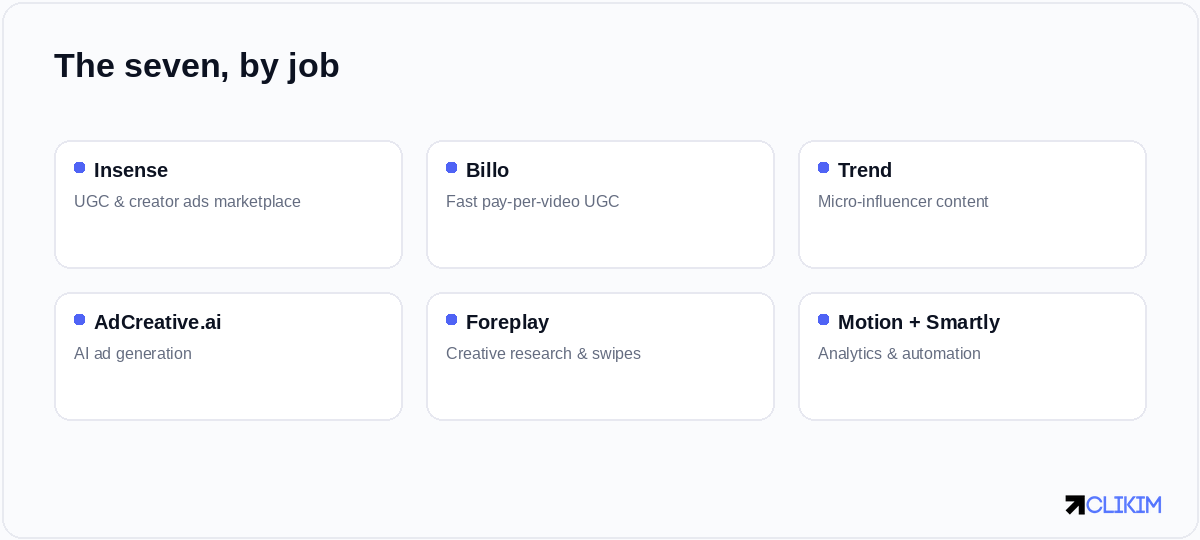
Seven platforms across five categories of the creative workflow.
UGC marketplaces: Insense, Billo & Trend
UGC-style video is the dominant creative format, so it's no surprise the most useful platforms are the ones that get authentic creator content into your account. These three are the heavyweights.
1. Insense — UGC & creator ads, end to end
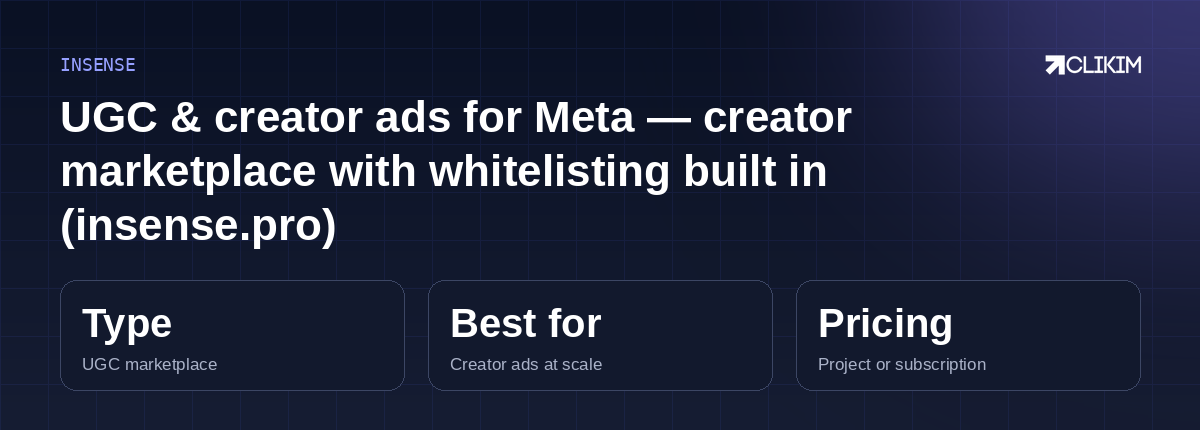
Best for: brands that want UGC and creator/partnership ads in one place. Insense connects you to a large vetted creator network and supports the full workflow — briefs, sourcing, usage rights, and payments — plus Meta Partnership Ads and whitelisting, so you can run content from a creator's own handle. That handle-level whitelisting matters: ads served from a real creator's profile tend to feel more native in-feed and can earn stronger early engagement than a plain brand post. It's a strong fit for DTC brands that need both creative volume and paid-performance features in a single tool, rather than stitching together a sourcing platform and a separate whitelisting workaround.
2. Billo — fast, budget-friendly UGC video
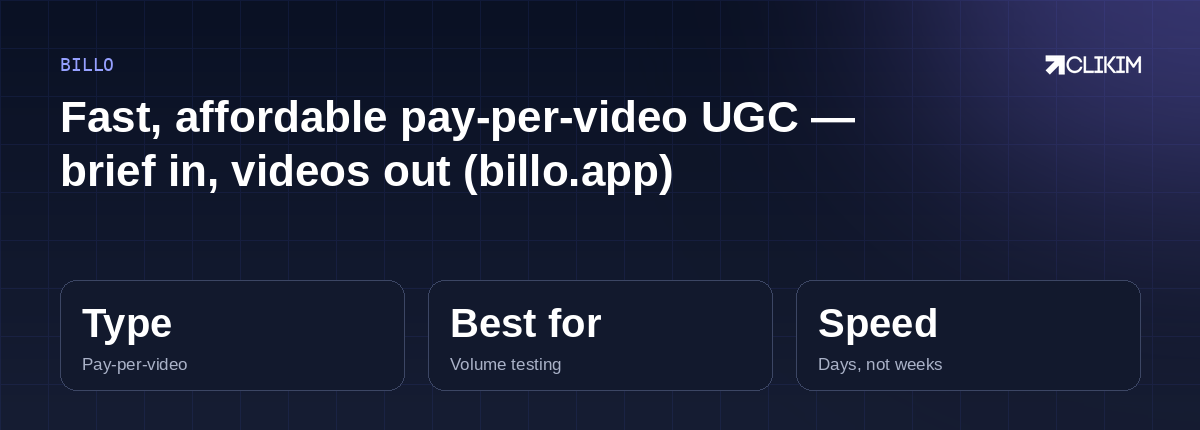
Best for: brands that want predictable, pay-per-video UGC without a subscription. Billo's self-serve marketplace lets you brief a video, pick from thousands of vetted creators, and receive ready-to-use clips optimized for Meta and TikTok — usually within days. Because you pay per video rather than per seat, it's the cleanest way to put a real cost on a creative test: brief five hooks, get five clips, and find out what resonates before committing budget. It's the easy on-ramp for teams testing UGC for the first time, and the per-asset pricing makes it simple to scale up only the angles that work.
3. Trend — UGC plus micro-influencer reach
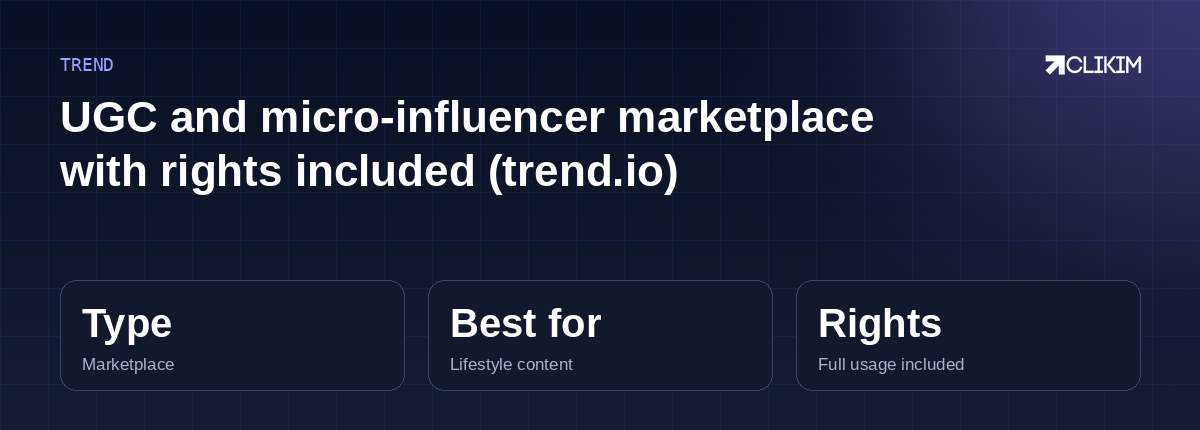
Best for: brands that want creator content and organic distribution. Trend sits at the intersection of UGC and influencer marketing — creators produce your content and can also share it with their own audiences, so a single brief can return both paid-ready assets and organic reach. It's well regarded for product-led, lifestyle-style visuals, which makes it a good match for physical-product brands that want their creative to look at home on a creator's feed. Use it when you want the content and a little earned distribution from the same engagement.
Pairing tipMany brands use more than one: a marketplace like Insense or Billo for steady human-filmed content, plus an AI tool (below) for rapid variations. Human creators for hero concepts, AI for volume.
AI, research, analytics & automation: 4–7
Creating content is only part of the loop. These four cover the rest — generating variations, finding winning angles, measuring results, and scaling.
4. AdCreative.ai — AI ad creative at scale
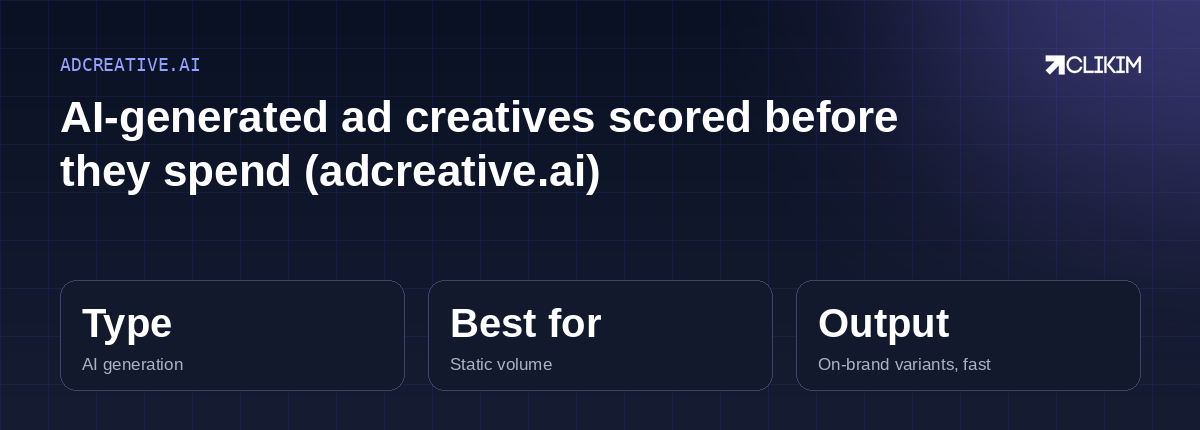
Best for: producing and testing many ad variations cheaply. AdCreative.ai generates image and video ads — and quick variations of proven concepts — in minutes rather than days, with conversion-focused scoring to flag which outputs are likely to perform. The trade-off is real: authentic human UGC still tends to win cold prospecting, and Meta now requires disclosure of AI-generated content in some contexts. The smart play is to use AI to multiply what's already working — fresh backgrounds, headline swaps, format resizes on a proven winner — rather than expecting it to invent your next hero concept from scratch.
5. Foreplay — creative research & swipe files
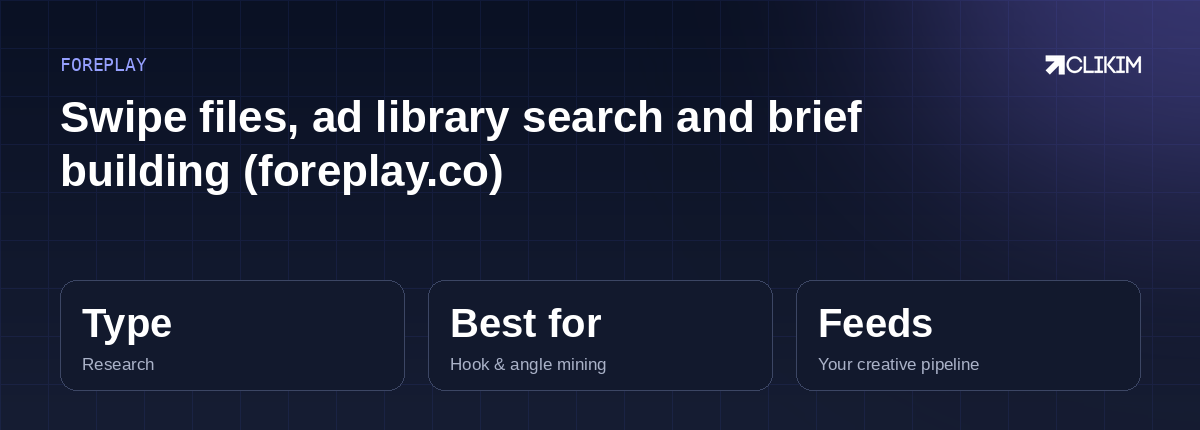
Best for: never running out of angles. Foreplay lets you save, tag and organize winning ads — often pulled from the Meta Ad Library — and turn them into structured briefs for your creators. Instead of a chaotic folder of screenshots, you build a searchable library of hooks, formats and competitors you can hand straight to a UGC creator. It systematizes the "study what's working" habit so research becomes a repeatable input to production rather than something you do once and forget.
6. Motion — creative analytics
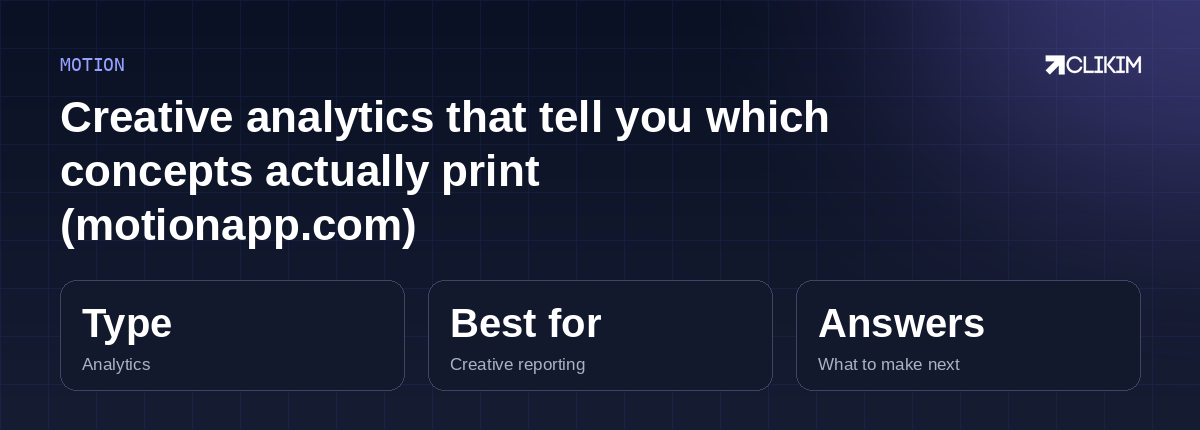
Best for: knowing which creative actually performs. Motion connects to your Meta account and turns raw spend data into creative-level reporting, so you can see which hooks, formats and concepts drive results — and cut the rest with confidence. The reports are built to be shared, which makes it the natural bridge between media buyers and creative teams: everyone looks at the same scoreboard. Closing this measurement loop is what makes high-volume testing actually pay off, because you stop guessing which variations to scale.
7. Smartly — creative & media automation
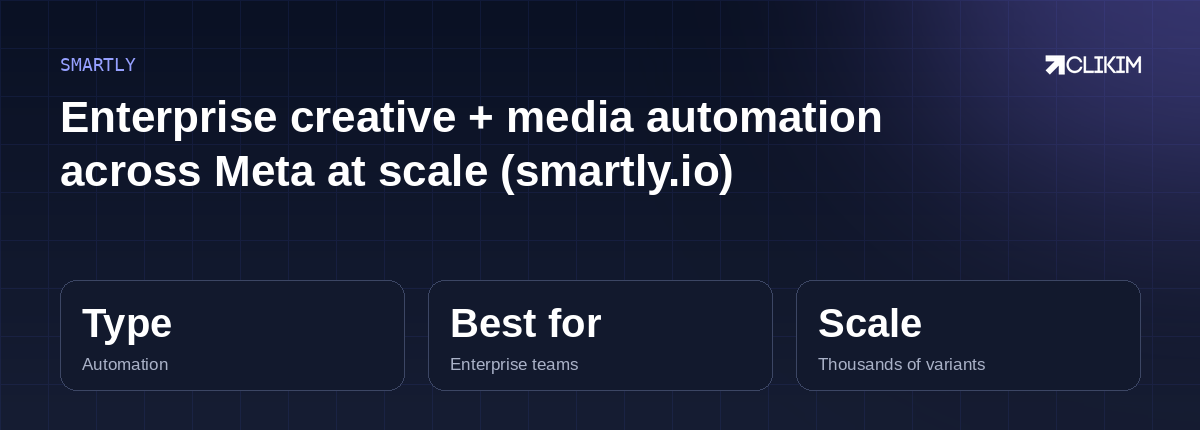
Best for: larger advertisers automating production and buying. Smartly is an enterprise platform that automates creative generation and media management across social placements at scale, with template-driven production that can localize and resize a concept into hundreds of variants automatically. It's overkill for a small account, but it earns its keep once manual workflows can't keep up with the creative volume Advantage+ and always-on testing demand. Think of it as the layer you graduate into when headcount, not ideas, becomes the bottleneck.
How to choose — and build a simple stack
Don't buy all seven. The right move is to find your biggest bottleneck and fix that first. A simple way to think about it:
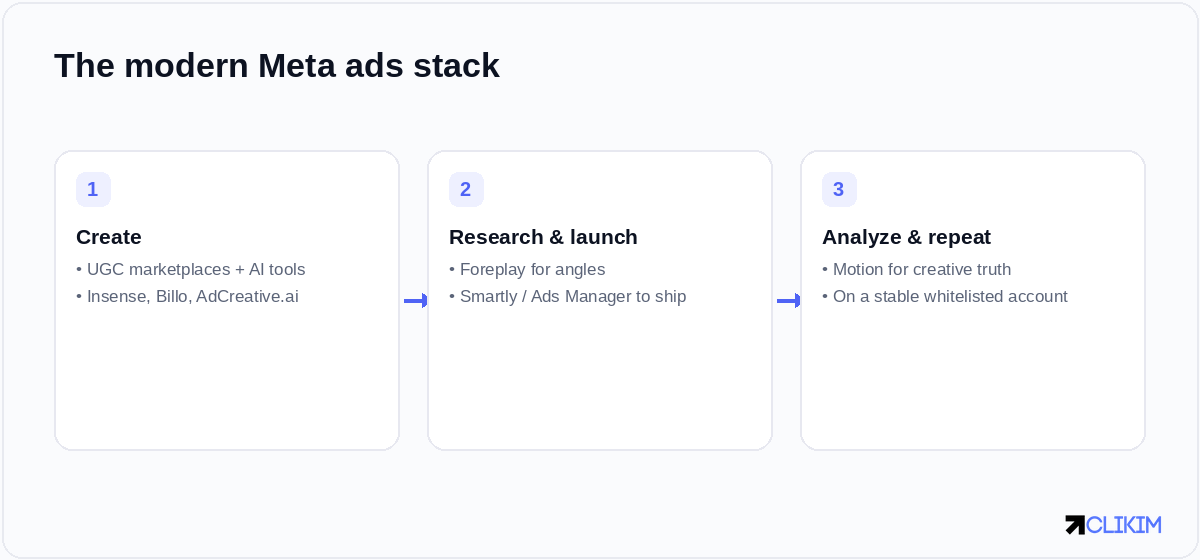
Create → research → launch → analyze — on a stable account.
- Can't make enough content? Start with a UGC marketplace (Insense, Billo or Trend), then add AI (AdCreative.ai) for variations.
- Out of ideas / angles? Add a research tool (Foreplay).
- Don't know what's working? Add creative analytics (Motion).
- Scaling past manual workflows? Consider automation (Smartly).
For most brands, a marketplace + an analytics tool covers 80% of the value. Add the rest only as the bottleneck moves. And remember the multiplier underneath it all — better creative lowers your CPM and CPA and lifts your CTR, so the tooling pays for itself when it raises creative quality and velocity.
The piece no platform replaces: your ad account
Here's what every "best tools" list leaves out. You can assemble the perfect creative stack — flawless UGC, AI variations, sharp analytics — and still lose if the creative runs inside a fragile account. All that testing and scaling is exactly the kind of activity that gets low-trust accounts flagged and disabled, and a single ban can stall your entire pipeline.
That's the layer Clikim provides. While the platforms above make the creative, a whitelisted Facebook agency ad account is the stable foundation that runs it — no preset spend cap, fewer rejections, and a rep who can reverse a wrongful disapproval in minutes so your testing never stops. New to the idea? See what an agency ad account is, or browse the wider agency ad accounts lineup. More guides live on the Clikim blog.
Frequently asked questions
What are the best platforms for Meta ads in 2026?+
What is a UGC marketplace?+
Which platform is best for UGC video ads on Meta?+
Should I use AI-generated ad creative?+
What is an ad creative research tool?+
Do these platforms replace a media buyer or agency?+
Do I still need a good ad account if I use these platforms?+
Great tools, sturdier accounts
Whitelisted infrastructure — the infrastructure layer under every tool in your stack.